
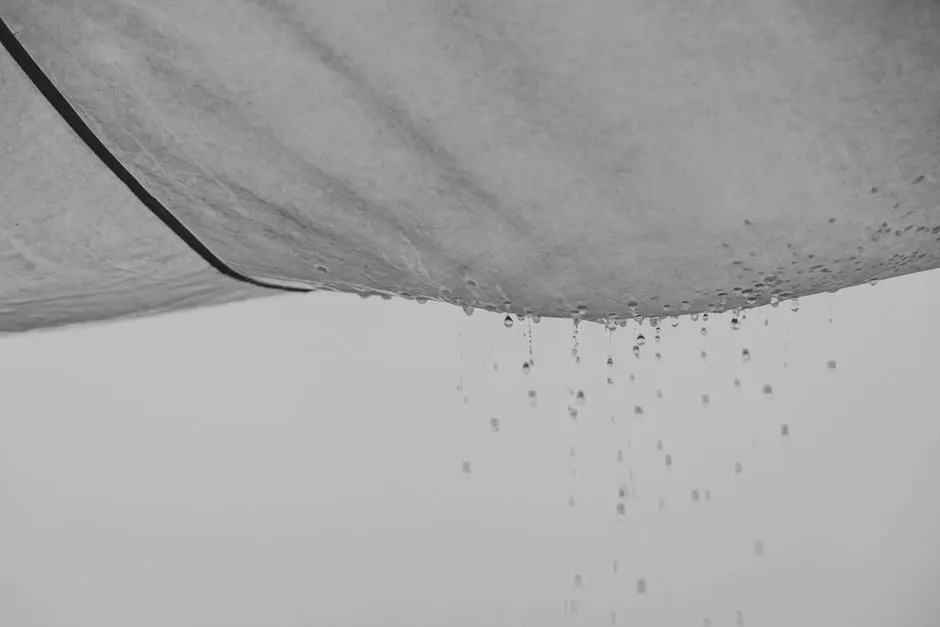
Water dripping through your ceiling in Florida means you have an active roof leak, and the first thing to do is contain the water and move anything valuable out of the way. Do not climb onto the roof in the rain. Put a bucket under the drip, poke a small drain hole if water is pooling behind the paint, and call a roofer the same day. The rest of this post walks you through stopping the immediate damage, finding the source, understanding what repairs cost in 2026, and knowing exactly when to call Roof Leak Repair in Florida.
Why Water Is Dripping Through Your Ceiling in Florida
Water dripping through a ceiling in Florida is almost always a roof leak that has been traveling through your attic or wall cavity before it finally shows up inside. The drip you see is rarely directly below the hole. Water enters at the roof, runs along a rafter or truss, soaks into insulation, and then finds the lowest point in your ceiling drywall. That journey can take days or weeks.
Florida makes this worse than most states. Between the afternoon thunderstorms from June through September, hurricane season running June 1 to November 30, and the sun baking your roof at 140°F or higher on summer afternoons, roofing materials here age faster than almost anywhere else in the country. A roof that would last 25 years in Ohio might give you 15 in Vero Beach or Apollo Beach.
Ceiling water leak repair in Florida is a category of work that starts with finding where water is actually entering, not where it is dripping. That distinction matters because patching the ceiling without fixing the roof guarantees the leak comes back with the next storm.
How to Stop Water Dripping from Your Ceiling Right Now
Here is the exact sequence we walk homeowners through on the phone when they call us mid-storm.
- Move furniture and electronics out of the drip zone. Water spreads across a ceiling and can drip from multiple points. Clear a 6-foot radius.
- Put a bucket or large pot under the drip. Put a towel under the bucket to catch splashes. If the drip is near an outlet or light fixture, turn off the breaker to that room first.
- If the ceiling is bulging, poke a small hole at the lowest point. Use a screwdriver or a nail. This sounds counterintuitive, but a controlled drain prevents the drywall from collapsing and dumping 20 to 50 gallons of water at once.
- Take photos and video. You will need these for your insurance claim. Photograph the drip, the ceiling damage, and anything damaged below.
- Do not go on the roof. Wet shingles, tile, and metal are slick. Every year we see homeowners injured trying to tarp their own roof in a Florida downpour.
If the water is coming in fast or spreading across a wide area, that is the point to call for Emergency Roof Leak Repair in Florida. We can usually have a technician on site the same day to stop the water and prevent the damage from getting worse.
Is Water Dripping Through Your Ceiling an Emergency in Florida?
Yes, water dripping through a ceiling in Florida is an emergency in most cases, because the damage compounds by the hour. A slow drip that seems manageable on Tuesday can mean a collapsed ceiling and ruined insulation by Thursday.
Treat it as urgent if any of these apply:
- Water is dripping faster than one drop every few seconds
- The ceiling is sagging, bulging, or feels soft when you press it
- Water is anywhere near a light fixture, ceiling fan, or electrical outlet
- The leak started during or right after a storm
- You can see mold, dark staining, or smell a musty odor
- More than one spot on the ceiling is wet
Mold is the reason we push homeowners to act fast. In Florida's humidity, mold can begin colonizing wet drywall and insulation within 24 to 48 hours. Once it takes hold, you are looking at remediation costs that dwarf the roof repair itself.
Common Causes of Ceiling Water Leaks in Florida Homes
After thousands of leak calls across the state, these are the culprits we find most often.
Flashing failures
Flashing is the metal that seals the joints around chimneys, vents, skylights, and where roof planes meet walls. It is the number one source of roof leaks we find in Florida. UV exposure and thermal expansion crack the sealant, and water gets in at every storm. Roof Flashing Repair in Florida is usually a one-day job.
Pipe boot cracks
Those black rubber collars around plumbing vent pipes dry out and split after 8 to 12 years in the Florida sun. When they crack, water runs straight down the pipe and into your ceiling. This is one of the cheapest roof repairs you can have done, and one of the most commonly ignored.
Storm and wind damage
Hurricane season runs June through November. A single 60 mph gust can lift shingles, crack tiles, and tear flashing loose. The leak may not show up until the next rain, which is why we recommend a roof inspection after any named storm that passes near your home. If you are dealing with storm damage, our team handles Storm Damage Roof Leak Repair in Florida including emergency tarping to stop water while we schedule permanent repairs.
Aging roof materials
Asphalt shingles in Florida typically last 12 to 18 years. Tile can go 25 to 30 with maintenance. Metal runs 30 to 45. Once your roof passes the end of its expected life, leaks become a pattern rather than a one-time event.
Clogged valleys and poor drainage
When debris builds up in roof valleys or behind chimneys, water backs up under shingles and finds its way inside. This is especially common after a windy week when palm fronds and oak leaves pile up.
What to Watch Out For: Mistakes That Make It Worse
We see the same handful of mistakes over and over, and each one turns a $400 repair into a $4,000 problem.
- Patching the ceiling before fixing the roof. The stain disappears, the leak does not. It comes back worse on the next storm.
- Using flex seal, caulk, or spray coatings as a permanent fix. These products fail within one Florida summer. They are a temporary bandage at best.
- Ignoring a slow drip. A drip every 30 seconds adds up to roughly 5 gallons a day. That is enough to soak insulation, rot framing, and grow mold.
- Hiring the first person who knocks on your door after a storm. Storm chasers move through Florida after every hurricane. They take deposits, do quick work, and are gone before the next rain.
- Skipping the attic inspection. The best leak detection happens from inside the attic, where you can trace the water path back to the entry point.
How Much Does Ceiling Leak Repair Cost in Florida?
Typical 2026 pricing in Florida for ceiling leak repair runs $350 to $1,200 for the roof-side fix, plus $300 to $1,500 for interior drywall and paint restoration if the ceiling was damaged. Emergency after-hours calls add $150 to $400.
Here is how that breaks down by the type of repair:
- Pipe boot replacement: $250 to $500
- Flashing repair around a chimney or vent: $400 to $900
- Shingle repair on a small section: $350 to $800
- Tile roof leak repair: $500 to $1,500, depending on tile matching
- Metal roof leak repair: $450 to $1,200
- Flat roof leak repair with coating: $600 to $2,000
- Emergency tarping: $400 to $900, often reimbursed by insurance
If the leak has been running for weeks, add mold remediation at $1,500 to $6,000 depending on the square footage affected. That is the real cost of waiting.
Most Florida homeowner policies cover sudden roof leak damage but not damage from long-term neglect. That is why we document everything with photos and a written scope when we arrive. It helps your claim, and it helps you see exactly what we found.
When to Call a Professional
Call a professional the moment water is actively dripping and you cannot identify the source within 15 minutes of looking. If the leak is anywhere near electrical wiring, if the ceiling is sagging, or if the drip started during a storm, that is a same-day call.
At Emergency Roofing Service, we start every job with ceiling leak detection in Florida - a full attic inspection, moisture meter readings, and a roof-level check to find the true entry point. We do not patch over problems. We find the leak, fix it, and verify it holds before we leave. If you are in an area we serve like Roof Leak Repair in Vero Beach, we can often be on site the same day you call.
Frequently Asked Questions
Why is water dripping through my ceiling in Florida?
Water dripping through a Florida ceiling is almost always a roof leak, most commonly from failed flashing, a cracked pipe boot, or storm damage. Water enters at the roof, travels along framing, and exits at the lowest point in your ceiling. The drip location is rarely directly under the actual leak.
How do I stop water dripping from my ceiling in Florida?
Contain it first: move valuables, place a bucket, and poke a small drain hole if the ceiling is bulging. Do not go on the roof in wet conditions. Then call a roofer for same-day repair. A temporary tarp can stop the water until permanent repairs are scheduled.
Is water dripping through ceiling an emergency in Florida?
Yes, in most cases. Florida's humidity allows mold to start growing on wet drywall within 24 to 48 hours. If the drip is steady, near electrical fixtures, or the ceiling is sagging, treat it as an emergency and call immediately.
How much does ceiling leak repair cost in Florida?
In 2026, expect $350 to $1,200 for the roof-side repair and $300 to $1,500 more if the ceiling drywall needs replacing. Emergency after-hours service adds $150 to $400. Mold remediation, if needed, runs $1,500 to $6,000.
Can I just patch the ceiling and wait?
No. Patching the ceiling without fixing the roof leak hides the symptom while the damage continues. Water keeps soaking insulation and framing, mold grows, and the next storm makes it worse. Fix the roof first, then repair the ceiling.
Get Help with Roof Leak Repair in Florida
If water is dripping through your ceiling right now, do not wait for it to get worse. Call Emergency Roofing Service at +18506353106 and we will find the leak, stop the water, and repair the damage - usually the same day.