
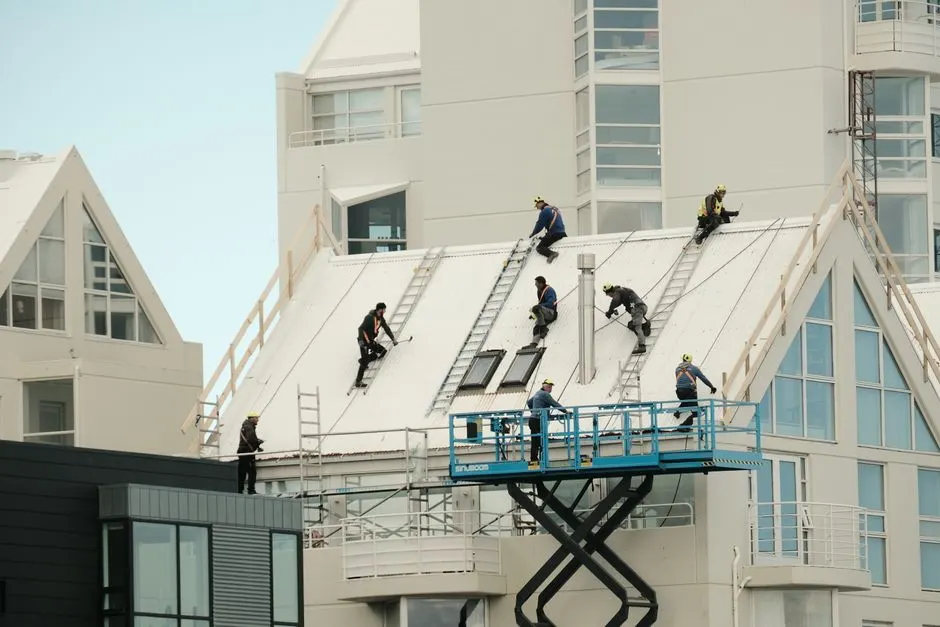
Flat roof leaking in Florida almost always traces back to one of seven causes: ponding water, failed seams, cracked coating, flashing failures, worn pipe boots, storm damage, or foot traffic. Fixing it means matching the repair to the actual cause - patching a symptom like a ceiling stain while the real problem sits 20 feet away on the membrane is how leaks come back three weeks later.
We run emergency leak calls across the state, and the pattern is consistent. Below we walk through each cause, how to spot it from the ground, and what the fix actually involves. If you need us on the roof today, our team handles Emergency Roof Leak Repair in Florida around the clock.
Why Is My Flat Roof Leaking in Florida?
Flat roof leaking in Florida is the result of UV degradation, heavy rain loads, and thermal cycling that break down roofing materials faster here than in almost any other climate. A flat roof in Tampa or Orlando takes more sun, more rain, and more 90-degree temperature swings in a single year than a roof in Ohio sees in five.
Flat roof leak repair in Florida is the process of locating the breach in the membrane, flashing, or drainage system and sealing it so water stops entering the building envelope. It is not the same as a full re-roof - most leaks we see are isolated failures that can be fixed in a single visit.
The tricky part is that water rarely drips straight down. It enters at a seam or a pipe boot, travels along the deck, and shows up as a stain on your ceiling 15 feet from the actual hole. That is why we start every job with proper flat roof leak detection rather than guessing at the visible stain.
Cause 1: Ponding Water and Poor Drainage
Ponding water is the number one cause of flat roof leaks we find in Florida, and it is almost always a drainage problem rather than a membrane problem. Water that sits for more than 48 hours after a storm will eventually find its way through seams, fasteners, and any pinhole in the surface.
Florida building code requires flat roofs to drain within 48 hours of rainfall. If you have standing water three days after a storm, you have a code issue and a leak risk.
What causes it:
- Clogged drains and scuppers packed with oak leaves, pine needles, and palm fronds
- Debris dams at the low point of the roof
- Sagging decking from years of water weight - a 1,000 sq ft pond an inch deep weighs about 5,200 pounds
- Drains installed at the wrong elevation during the original build
The fix depends on the cause. Clearing debris and re-sealing around the drain ring is a $250-$600 job. Re-pitching a sagging section or adding a secondary drain runs $1,200-$3,500. If the ponding has already compromised the membrane, we combine drainage work with flat roof coating repair Florida to restore the surface.
Cause 2: Failed Seams and Membrane Separation
Failed seams are the second-most-common cause of flat roof leaks in Florida, especially on TPO and EPDM roofs installed between 2005 and 2015. Heat welding and adhesive both break down under sustained UV, and once a seam lifts, water wicks underneath the membrane and spreads sideways.
You can sometimes spot this from the ground. Look for wavy edges, lifted corners, or wrinkles that were not there last year. On a white TPO roof, black streaks along a seam usually mean the adhesive has failed and dirt is collecting in the gap.
Repair options:
- Heat-weld patch - for TPO and PVC, we cut back the failed seam, clean it, and weld a new strip. $400-$900 per seam.
- Adhesive seam tape - a temporary fix that buys you a season, not a decade.
- Full membrane replacement - when more than 20% of seams have failed, patching becomes throwing money at a losing battle. $6-$11 per sq ft installed.
Cause 3: Cracked or Blistered Roof Coating
Cracked or blistered roof coating lets water straight through to the substrate, and it is the leak cause we see most often on older modified-bitumen and tar-and-gravel roofs across Central Florida. A coating that has served 7-10 years in Florida sun is at the end of its life.
Walk the roof after a dry week and look for:
- Alligator cracking - a web of small cracks across the surface
- Blisters that feel soft or squishy underfoot
- Chalky residue that rubs off on your hand
- Areas where the coating has worn thin enough to see the mat underneath
If the coating is the only failure, a recoat is the right call - $2.50-$5.50 per sq ft in 2026 pricing, depending on the system. If the blisters have already breached the mat, you are looking at a partial re-roof, not a recoat. We see homeowners waste $2,000-$4,000 recoating a roof that needed replacement, and the leak returns within a year.
Cause 4: Flashing Failures at Walls, Edges, and HVAC Curbs
Flashing failures account for roughly one in four flat roof leaks we repair, and they are the hardest to spot because the flashing is often hidden behind stucco, siding, or a parapet wall. Metal flashing expands and contracts with every temperature swing, and the sealant holding it in place eventually gives up.
The usual suspects:
- Base flashing at parapet walls - the most common failure point
- Counter-flashing that has pulled away from the wall
- HVAC curb flashing where the unit sits on the roof
- Edge metal that has lifted in wind
- Skylight and vent curbs
Proper Roof Flashing Repair in Florida means removing the old sealant, re-securing the metal, and installing new termination - not just smearing more caulk over the top. A caulk-only repair lasts one rainy season. A proper flashing repair lasts 10-15 years. Cost runs $350-$1,200 per location depending on access and height.
Cause 5: Punched or Dried-Out Pipe Boots
Punched or dried-out pipe boots are the single most common source of small, persistent leaks we find on Florida flat roofs. Every plumbing vent, exhaust fan, and conduit penetration has a boot or collar sealing it, and the rubber or plastic in those boots degrades fast under Florida UV.
A pipe boot that was flexible five years ago is often brittle and cracked today. Once the rubber splits, water runs straight down the pipe and into your ceiling - usually showing up as a stain on the ceiling directly below the vent stack.
Replacing a pipe boot is one of the cheapest fixes on this list: $150-$450 per boot installed. We replace them with UV-rated boots that hold up longer in Florida sun. If you have multiple boots of the same age, replacing them all at once saves you the trip charge and prevents the next leak. Our Roof Pipe Boot Repair in Florida service covers every penetration type, from 1.5-inch plumbing vents to 6-inch exhaust stacks.
Cause 6: Storm and Hurricane Damage
Storm and hurricane damage creates flat roof leaks in Florida that did not exist before the weather event, and they range from obvious tears to hairline punctures you cannot see from the ground. A single 60 mph gust can lift edge metal, tear a seam, or drive a palm frond through the membrane like a spear.
After any named storm or severe thunderstorm, check for:
- Missing or lifted edge metal
- Punctures from flying debris
- Torn or peeled-back membrane at corners
- Displaced HVAC units or their curbs
- New ponding where there was none before
If you have water coming in and the storm just passed, the priority is stopping the leak today. Our Emergency Roof Tarping in Florida service puts a commercial-grade tarp over the damaged area to stop water intrusion until permanent repairs can be made. Tarping typically runs $400-$1,200 depending on roof size and access, and it is often covered by insurance when the damage is storm-related.
Cause 7: Foot Traffic and HVAC Technician Damage
Foot traffic and HVAC technician damage is the leak cause homeowners never suspect, and it is responsible for a surprising share of the flat roof leaks we fix. Flat roof membranes are tough, but they are not designed for repeated foot traffic in 95-degree heat, when the surface is soft and punctures easily.
Every time an HVAC tech walks across the roof to service the unit, they compress the membrane, stress the seams, and risk stepping on a fastener head or a sharp edge. Over a few years, that adds up.
Signs of traffic damage:
- Scuff marks or worn paths between the roof access point and the HVAC unit
- Compressed or dented insulation under the membrane
- Small punctures that look like pinholes
- Cracked coating along the walking path
The fix is usually a targeted patch plus a walkway pad installed on the traffic path. Walkway pads cost $8-$15 per sq ft and prevent the problem from recurring. If your HVAC company has been servicing the same unit for years without walkway protection, this is worth checking before the next service call.
How Much Does Flat Roof Leak Repair Cost in Florida?
Flat roof leak repair in Florida costs between $350 and $1,500 for most single-location repairs in 2026, with the average sitting around $650. The price depends on the cause, the roof height, and whether the repair is a patch or a section replacement.
Typical 2026 pricing we see:
- Pipe boot replacement: $150-$450
- Flashing repair: $350-$1,200
- Seam repair: $400-$900
- Drain clearing and re-seal: $250-$600
- Coating recoat (full roof): $2.50-$5.50 per sq ft
- Partial membrane replacement: $6-$11 per sq ft
- Full flat roof replacement: $7-$14 per sq ft
Emergency calls after hours or during a storm carry a premium - usually $150-$400 on top of the repair cost. If the leak is active and water is entering the building, that premium is almost always worth paying. Water damage remediation runs $3,000-$8,000 for a typical ceiling and insulation repair, which dwarfs the cost of an emergency leak fix.
We give you a flat price before we start. No surprise line items.
Common Mistakes We See Homeowners Make
Common mistakes turn a $500 repair into a $5,000 problem, and we see the same four over and over on flat roofs across Florida.
- Caulking the ceiling stain instead of the roof. The stain is where water exits, not where it enters. Sealing the ceiling traps moisture and grows mold.
- Using the wrong sealant. Hardware-store silicone does not bond to TPO, EPDM, or modified bitumen. It peels within months and leaves a residue that makes the proper repair harder.
- Walking the roof in soft-soled shoes or bare feet. You will not feel a puncture until the next rain. Wear flat, soft-soled shoes and step on the seams, not between them.
- Ignoring a small leak because it only drips during heavy rain. Small leaks become big ones. The membrane does not heal itself.
One more: hiring a general handyman for a flat roof leak. Flat roof systems require specific materials and techniques - heat welding, proper termination, correct coatings. A generalist will patch it, and it will leak again.
When to Call a Professional
Call a professional when the leak is active, when you cannot find the source from the ground, or when the roof is more than 10 years old. Those three conditions cover about 90% of the flat roof leaks we get called out for.
Specifically, call us if:
- Water is actively dripping into the living space
- You have already patched the same spot twice and it is leaking again
- The roof is over 10 years old and you have never had it inspected
- You see ponding water 48 hours after rain
- A storm just passed and you see lifted or torn membrane
- Your ceiling stain is growing
Our team handles flat roof leak detection Florida homeowners can rely on - we use moisture meters, infrared scanning when needed, and a physical inspection of every seam, flashing, and penetration. We find the leak, fix it, and test it with a hose before we leave. If you are in one of the communities we serve, like Roof Leak Repair in Vero Beach, we can usually be on your roof the same day.
Frequently Asked Questions
Why is my flat roof leaking in Florida?
Flat roof leaking in Florida is usually caused by ponding water, failed seams, cracked coating, flashing failures, or worn pipe boots. The state's UV intensity and heavy rain break down roofing materials 2-3 times faster than in cooler climates, so a roof that would last 20 years up north may need attention at 10-12 years here.
How do I fix a flat roof leak in Florida?
Find the actual entry point first - not the ceiling stain - then match the repair to the cause. A pipe boot replacement takes about an hour and costs $150-$450. A seam repair runs $400-$900. For active leaks during a storm, emergency tarping at $400-$1,200 stops the water until permanent repairs can be made.
How much does flat roof leak repair cost in Florida?
Most single-location flat roof leak repairs in Florida cost $350-$1,500 in 2026, averaging around $650. Emergency after-hours calls add $150-$400. Full coating recoats run $2.50-$5.50 per sq ft, and partial membrane replacement runs $6-$11 per sq ft.
Can I repair a flat roof leak myself in Florida?
You can handle minor pipe boot replacements and small coating touch-ups if you are comfortable on the roof. Anything involving seams, flashing, or membrane replacement should be done by a licensed roofer - the wrong sealant or technique will fail within a season and can void your roof warranty. Active leaks and storm damage are always a call-a-pro situation.
How long does a flat roof leak repair take?
Most single-location repairs take 1-3 hours on site. Coating recoats take 1-2 days including cure time. Partial membrane replacement takes 1-2 days. Emergency tarping is usually done within 2-4 hours of arrival.
Get Help With Roof Leak Repair in Florida
If your flat roof is leaking, we can be on it today. Our team handles everything from a single pipe boot to full storm damage repair, and we give you a flat price before we start.
Call Emergency Roofing Service at +18506353106 and we will get your roof watertight.